Introduction to AI Agents
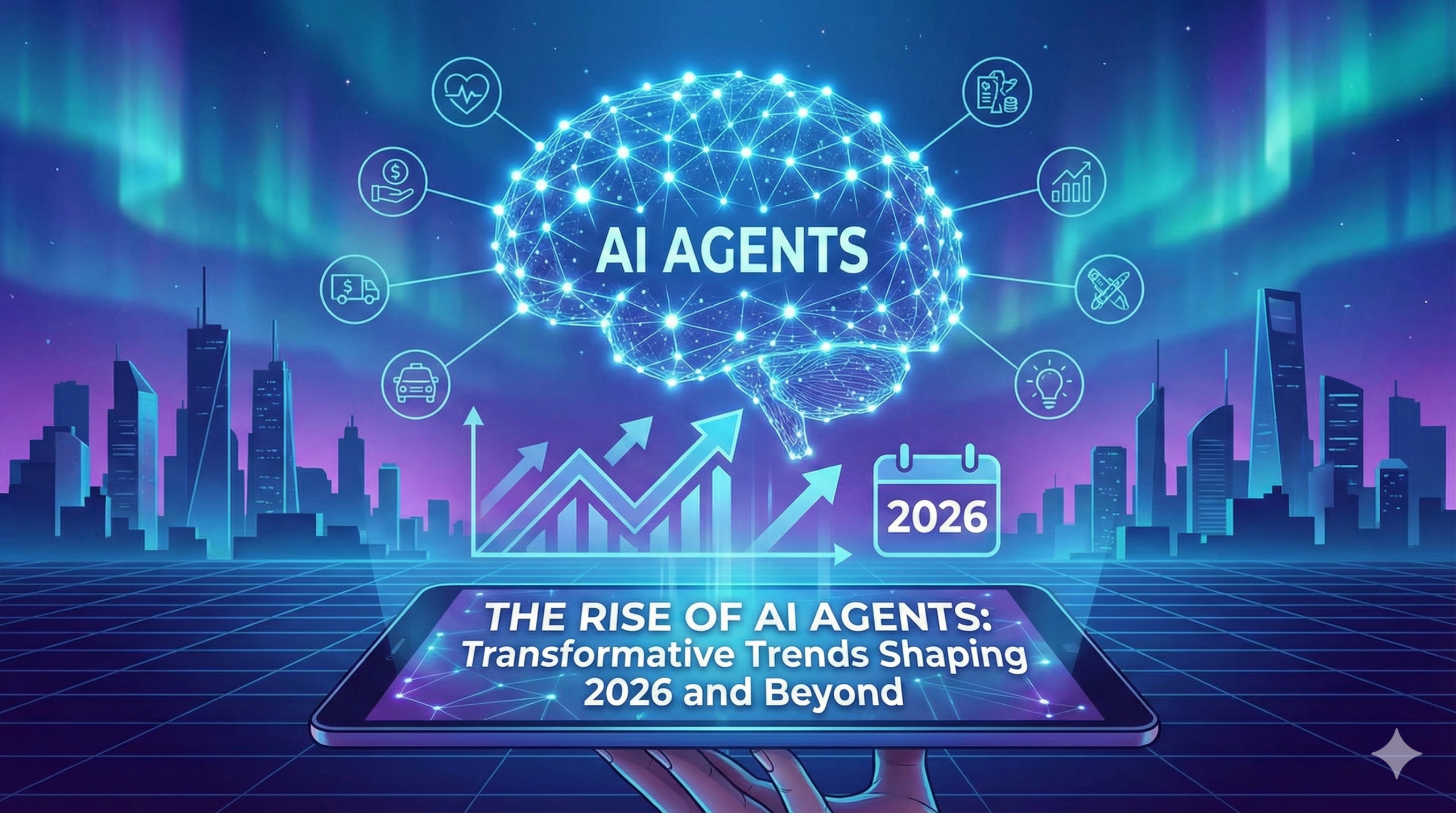
In the rapidly evolving landscape of artificial intelligence, AI agents are emerging as one of the most transformative technologies set to redefine how we interact with machines and automate tasks in 2026. Unlike traditional AI models that respond to queries in a static manner, AI agents are autonomous entities capable of perceiving their environment, making decisions, and taking actions to achieve specific goals. This shift from reactive to proactive AI is driven by advancements in large language models (LLMs), reinforcement learning, and integration with physical systems.
As we delve into 2026, experts predict that AI agents will become integral to everyday life, from personal assistants that manage schedules and purchases to enterprise solutions that handle complex workflows. The concept of “agentic AI” – where AI not only understands but acts on behalf of users – is gaining traction, with companies like OpenAI and Anthropic leading the charge through models that can reason, plan, and execute multi-step processes.
This article explores the key trends, applications, challenges, and future implications of AI agents in 2026. We’ll examine how these agents are integrating into physical worlds, the ethical considerations they raise, and the skills needed to leverage them effectively. By understanding these developments, businesses and individuals can prepare for a world where AI doesn’t just assist but anticipates and acts.
The Evolution of AI Agents
The journey of AI agents traces back to early concepts in computer science, such as Alan Turing’s ideas on intelligent machines. However, the real breakthrough came with the advent of deep learning in the 2010s, enabling models like GPT series to handle natural language processing. By 2025, we saw the maturation of these models into agents capable of chaining actions, such as browsing the web or coding autonomously.
Entering 2026, AI agents are evolving beyond digital confines. Deloitte’s Tech Trends report highlights “AI goes physical,” where agents converge with robotics for applications in logistics and personal assistance. For instance, modular robot platforms are being developed to allow agents to control physical devices, performing tasks like warehouse inventory management or home care for the elderly.
One pivotal trend is the rise of multi-agent systems. Frameworks like CrewAI and AutoGen enable multiple agents to collaborate, simulating team dynamics. In a business context, an AI agent might handle customer inquiries, another processes data analysis, and a third executes transactions – all seamlessly integrated.
Moreover, continual learning is revolutionizing agent capabilities. Instead of static models, agents now update in real-time based on new data, reducing the need for massive retraining sessions. This shift could allocate more compute to inference rather than training, making agents more efficient and responsive.
Key Trends in AI Agents for 2026
1. Integration with Physical Systems
2026 marks the year AI agents go beyond screens into the physical realm. Predictions indicate that agents will control robots for tasks requiring dexterity and decision-making. For example, in manufacturing, AI agents could optimize assembly lines by predicting failures and rerouting processes autonomously.
In consumer applications, humanoid robots powered by AI agents are expected to scale rapidly. Tesla’s Optimus and similar projects demonstrate how agents can learn from human demonstrations, adapting to new environments without explicit programming.
2. Agentic Workflows in Enterprises
Enterprises are adopting agentic AI to automate complex workflows. Snowflake’s partnership with OpenAI exemplifies this, enabling corporate agents to handle data queries and insights generation. By mid-2026, it’s predicted that AI agents will manage 20-hour software engineering tasks reliably, transforming productivity.
Voice AI is another trend, making interactions more natural. Evolutions in models like Gemini and Claude allow conversational agents that understand context and tone, enhancing customer service.
3. Decentralized and Verifiable AI Agents
With the push for decentralized AI, platforms like 0G Labs are promoting modular stacks that ensure verifiable computations, moving away from black-box models. This addresses trust issues, especially in sensitive areas like finance, where agents might execute trades or manage portfolios.
4. Multimodal Capabilities
Multimodal AI agents, capable of processing text, images, video, and audio, are set to dominate. Tools like GPT-4 and Grok enable agents to generate videos or analyze multimedia data, opening doors to creative industries.
Applications Across Industries
Healthcare
In healthcare, AI agents are revolutionizing patient care. They can monitor vital signs in real-time, predict health events, and even assist in surgeries through robotic arms. Trends show AI spending in healthcare focusing on personalized medicine, where agents analyze genetic data to tailor treatments.
Education
AI for teachers is a booming trend. Agents act as tutors, grading assignments and providing personalized learning paths. By 2026, immersive experiences powered by AI agents will make education more engaging.
Finance
In finance, AI agents handle prediction markets and investment strategies. Bank of America’s 2026 themes highlight AI’s role in portfolio shaping.
E-commerce
Agents will buy items autonomously on platforms like Amazon, predicting user needs based on behavior.
Challenges and Ethical Considerations
Despite the promise, AI agents pose challenges. Security is a major concern; with agents handling sensitive data, vulnerabilities could lead to breaches. The “synthetic content crisis” arises from agents generating realistic media, blurring lines between real and fake.
Ethical AI is crucial. Trends emphasize transparency, with regulations like California’s AI requirements mirroring EU standards. Bias in agents could perpetuate inequalities, necessitating diverse training data.
Moreover, the impact on jobs is debated. While agents automate routine tasks, they create demand for skills like AI orchestration and prompt engineering.
Skills for Thriving with AI Agents in 2026
To leverage AI agents, individuals need specific skills:
- Prompt Engineering: Crafting effective instructions for agents.
- AI Workflow Automation: Using tools like Zapier to integrate agents.
- RAG and Fine-Tuning: Enhancing agents with retrieval-augmented generation.
- LLM Evaluation: Managing and assessing agent performance.
Human-AI collaboration will be key, with AI fluency becoming a core competency.
Future Predictions
Looking ahead, 2026 could see Google overtaking in the AI race, with specialized agents from competitors. Acquisitions like Google buying Thinking Machines Lab might accelerate developments.
Agents will embed into workflows, like “Cursor for X,” transforming how we work. However, infrastructure constraints, such as energy for data centers, will need addressing.
In conclusion, AI agents represent a paradigm shift, promising efficiency but demanding responsible implementation. As 2026 unfolds, staying informed and adaptable will be essential for harnessing their potential.